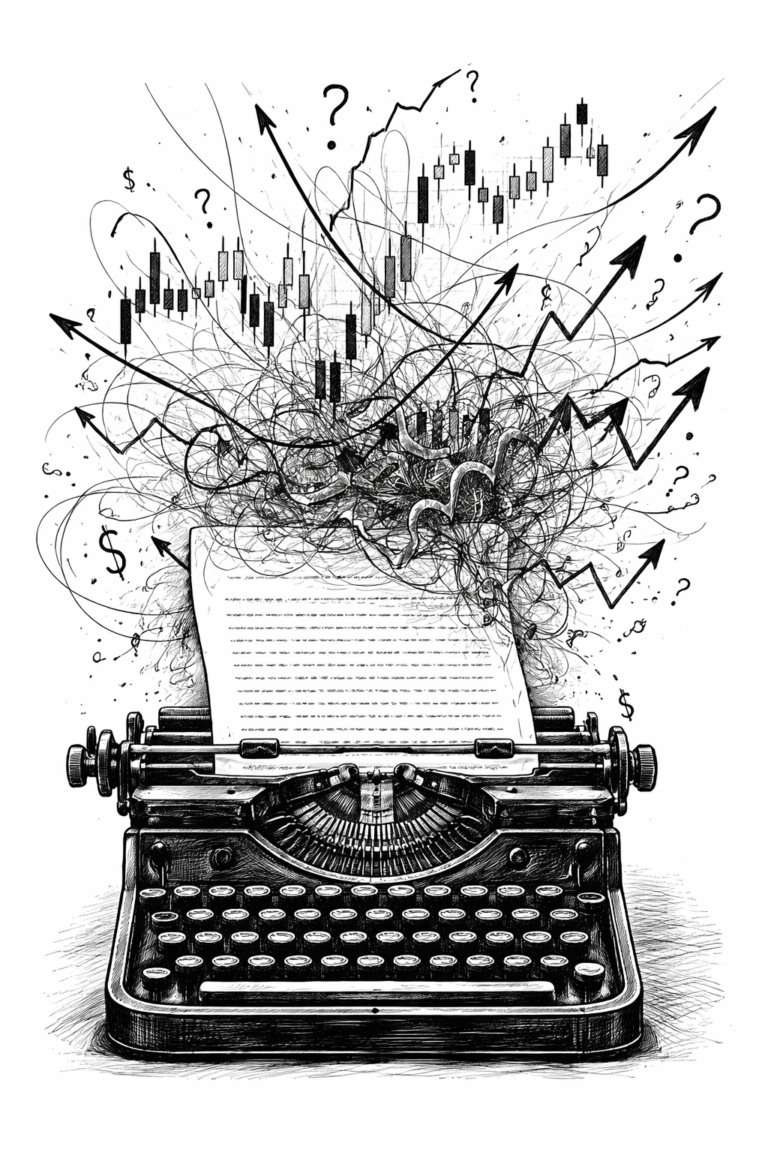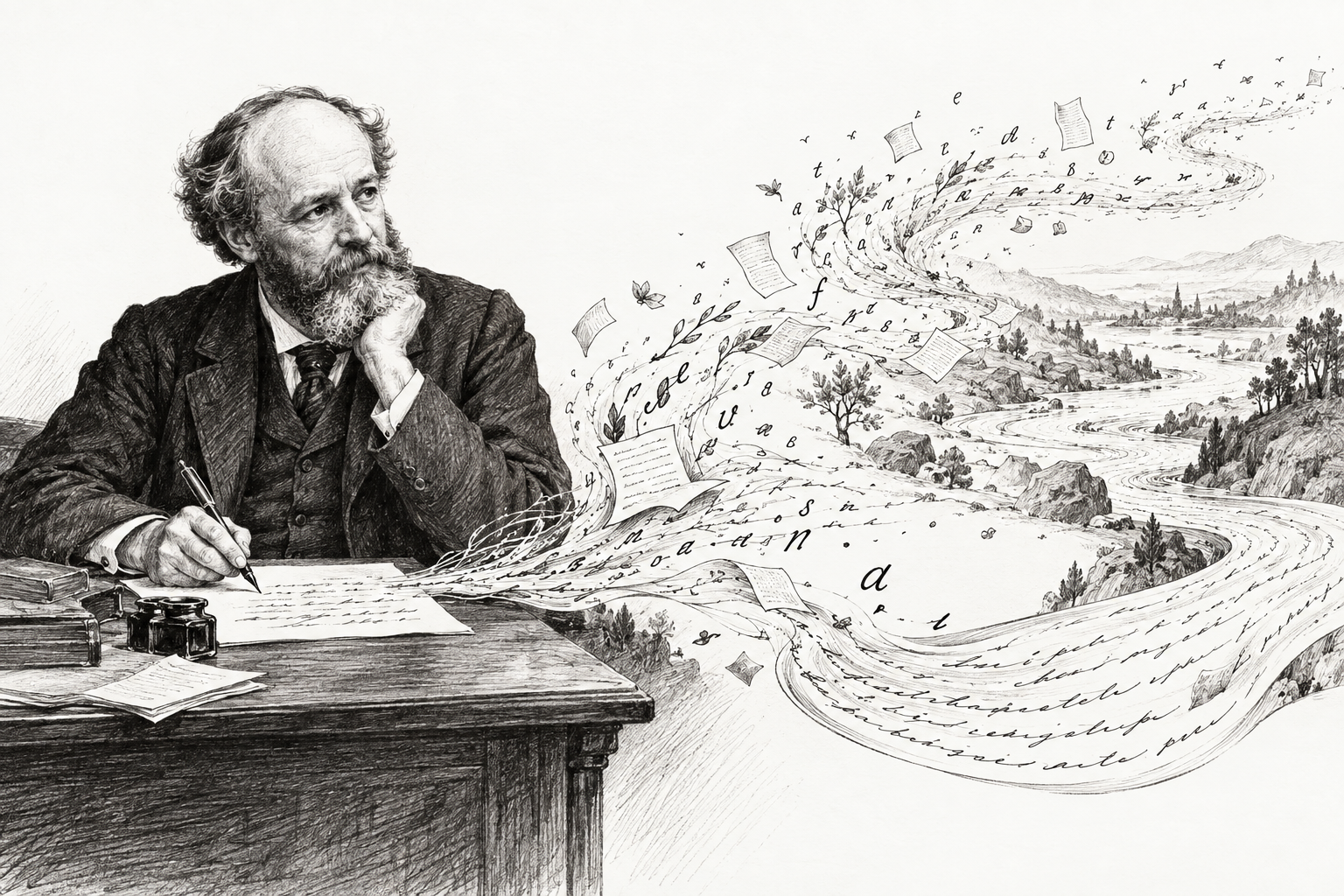
If William James were alive today, I like to imagine him hunched over a laptop, coffee gone cold, trying to understand why his latest Substack post didn’t perform as well as last week’s. He’d be bemused by engagement metrics, intrigued by SEO, but more interested in the psychology of why people click, scroll and believe in brands.
James, America’s founding father of psychology, made a career out of asking taxing questions about perception, belief and attention. I particularly love the fact that he refused to write only for academics, preferring a plainspoken style that risked his reputation but ultimately widened his reach. To teleport one of his phrases, he was a man who “sketched large circles” of understanding at a time when academics were pompous, self-righteous and preferred neat borders.
A ‘certain blindness’ in modern marketing
James once confessed that what horrified him most in life was “our total ignorance of one another”. He called it a certain blindness; the inability to truly see and feel the inner significance of lives different from our own. To him, this wasn’t a flaw of character but a condition of consciousness. Psychologists tell us frequently that the human mind naturally edits the world down to what feels familiar, safe and relevant.
Marketers do this every day. We build personas that smooth away the rough edges of real people. We segment audiences into neat clusters, convinced we understand them because we’ve mapped their “journey”. Yet what James grasped – long before the era of analytics dashboards – is that empathy can’t be automated. To see people as they are, not as we imagine them, requires humility and imagination.
This blindness explains why so many campaigns misfire: we tell stories that reflect ourselves rather than the audience we claim to serve. We default to what James might have called “habitual associations” – safe and bland clichés, or rather heuristics that feel safe because we think they are ours. But empathy, as James saw it, begins with friction: a recognition that other people’s experiences are not just different, but fundamentally at odds with our own.
The associating mind
James described the mind as “an associating machine”. By this, he meant it is a ceaseless current of connections linking sensations, ideas and emotions into meaning. He saw thought not as a series of isolated sparks but as a stream, one impression flowing into the next. What we call insight, he said, is often just the moment when two things we already knew finally connect.
That insight alone should be gold dust in marketing circles. Put another way, the best content doesn’t simply inform, it associates. It connects the unfamiliar to the familiar, and the abstract to the emotional. In doing so, it connects the brand to something that already matters to people. Every metaphor, story and image a marketer serves up is really a bridge – a way of letting audiences feel that what you’re saying belongs inside their own mental world.
He, of course, understood why nostalgia works, storytelling sticks and that the human brain is persuaded less by arguments than by echoes of its own experience. To James, meaning was never fixed. This is surely as true for a brand as it is the mind.
If correct, the marketer’s task is not to manufacture truth but to create the conditions where meaning can emerge. This happens in the fluid space between message and mind, or rather between what’s said and what’s remembered.
Habit and the craft of consistency
“Habit,” James wrote, “is ten times nature.” He saw habit as the way character becomes visible in action. What we repeatedly do, he believed, is what we are.
Content marketing, for all its claims over creativity and innovation, runs on the same law. Every newsletter, caption and blog post is a brushstroke in a much larger company portrait. Audiences don’t trust brands because of a single brilliant idea; they trust them because the message shows up, again and again and again, with integrity.
Consistency is the foundational base that allows creativity to flourish. Habit, in James’s view, liberated the mind rather than constraining it. The same holds for creative teams. Rituals – weekly brainstorms, editorial rhythms and feedback loops – create the structure that allows invention to happen.
To build belief, marketers must cultivate the habits that make their messages trustworthy. And they can do so by practicing clarity, empathy and craft until they all become second nature.
Wild facts and open minds
Yet James still had a soft spot for what he called “wild facts”. These are the messy, irregular and inconvenient phenomena that don’t fit neatly into theory. He believed truth was alive, always in motion and always slipping through the grasp of those who tried to domesticate it. “Our science,” he warned, “is a drop; our ignorance, a sea.”
As content marketers, he would impel us to stay curious and to keep scanning for the stories that don’t quite fit the brand deck but somehow feel more human. James understood that fear of the unfamiliar is where prejudice begins. And openness, therefore, is where inclusion is born.
Marketing, too, needs this kind of moral curiosity. It’s all too easy to retreat into data dashboards and supposed best practices, to optimise away the weirdness that gives ideas their spark. But attention is finite and fascination fragile.
Maybe that’s what he meant by “sketching large circles of inclusion”. We’ll never finish the drawing; our hands will always be shaky, our pencils tentative and our lines imperfect. But perhaps the most Jamesian thing we can do is to keep sketching anyway.
Feel, do, think.
Ok, now to the real point. I am really sorry to have wasted your time because everything above has just been preamble. Thank you for indulging me.
If William James were alive today and, by some wild set of unfortunate events, found himself working as a chief marketing officer, he’d still be considered a genius. So regardless of everything above, here’s why.
James would flip the modern marketing funnel on its head. The creative industry has a popular framework that teaches us to operate on the basis that people think, feel, do. This is essentially based on the idea that reason precedes emotion and emotion precedes action. James fundamentally disagreed. Through his work with Carl Lange he argued that emotion doesn’t follow thought. Instead, James and Lange argue that emotion is the sensation that emerges from doing. So we don’t run because we’re afraid, we feel fear because we run.
That’s the revolution at the heart of the James-Lange theory of emotion. It aligns with what David Hume called our “ruling passions” – the idea that reason is the servant, not the master, of emotion. Centuries later, Antonio Damasio made the same case in Descartes’ Error: the body decides first, the brain rationalises after.
So James would tell us marketers to stop trying to make people think their way into caring. He’d tell us to make people feel something real and give them something to do. Thought will follow, and post-rationalise. That’s why an evocative image can move us before we have language for it. And it’s why a simple act – like signing a petition, sharing a link or trying a product – binds people to an idea faster than a handful of logical bullet points ever could.
Think about the campaigns that stand out to you. The most powerful ones always prompt action through emotion, however small, and let meaning crystallise afterwards. James knew the mind is an associating machine, but he also knew that it is full of sensation. Feel first. Do next. Think last.
Before we think, we move. Before we move, we feel. And in that small, human order lies the heart of every story worth telling.